
When you have completed both the Indigenous Ways of Knowing and seasonal scouting trainings (hatchling or nesting training), you are able to sign up for your first shifts!
When scouting the parks, you will be focused on:
Looking at the Nest Map to check the status of protected nests, see if any of the nest protectors are damaged/tampered with, or if the grass inside the protector needs to be trimmed (to help us see potential emergence holes / hatchlings).
Responding to Hotline calls about turtles on land, hatchlings, or nesting mamas.
Helping turtles cross the road.
Speaking to parkgoers about Turtle Protectors and encouraging them to save the Hotline number in their phones in case they see turtle activity.
Turtle Protectors Hotline
The Turtle Protectors Hotline number is 647-491-4057
Communication between volunteers and the Hotline is one of the most important parts of our work. The Hotline needs to know what is happening in the parks, and is also there to help guide volunteers. It is always best to make sure - calling to seek support can save a turtle’s life.
Volunteers must call the Hotline when:
You see a turtle on land (including adult turtles and hatchlings)
You find an injured or deceased turtle
You’re unsure if a turtle needs care because:
They have been in the same place throughout your shift (on land or in water)
They appear stuck
They enter private property
They keep falling when trying to climb an obstacle
Your gut is telling you something isn’t right
You need to leave a turtle you are monitoring because it is the end of your shift or you do not feel well / are injured
The Hotline is monitored by volunteers from about 7 AM - 9 PM every day.
We encourage parkgoers to save the Hotline number in their phones, so they can call us if they spot a turtle on land. Hotline Operators communicate directly with Turtle Protector co-founders, who reach out to turtle biologists for support when needed.
Using Park Chats
We use Signal for communicating with volunteers in each park. You can use Signal on both computer and mobile.
Every volunteer should be in the following chats:
[Park Name] Chat: We have dedicated chats for each park (for example, High Park, Rennie, Humber, etc). We use the park chat to communicate important information about what is happening in the park with other volunteers in that park.
Turtle/Hatchling on Land: This chat is for the Hotline Operator to send messages about turtles or hatchlings on land. Volunteers will only write in this chat if they are responding to a call and are on their way to be with turtle or hatchling. Please keep notifications for this chat on.
Park Check In: This chat is used for checking in and out of your shifts. Simply send your name and the park name when checking in and out (for example, “Jess D checking into Brickworks” and, at the end of your shift, “Jess D checking out of Brickworks”). We use this chat to track volunteer hours and to help us know who is in each park at any given time. Feel free to mute notifications for this chat.
General Communications: We use this for casual chats between all of the parks, this is where you can share images, video and other links. Feel free to mute notifications for this chat.
Text the Hotline to be added to these chats. Please include your name and the park(s) you are volunteering in.
Signing up for Shifts
Volunteers sign up for and record their shifts in the online Volunteer Schedule spreadsheet (available on Volunteer Central). This is best done using a computer, as the spreadsheet can be harder to navigate on mobile devices.
Find your local park using the tabs at the bottom of the spreadsheet.
Select the week and time slot you are volunteering for, click on it and then type your first name and initial as well as the time you will be on shift. More than one person can sign up for a shift.
Please also add any dates you are away in the “absences” box for each week.
New volunteer names are in red. Mentor names are in bold. Mentors are returning volunteers who can train new volunteers. New volunteers can connect with mentors using the Signal chat for each park, and join them during their shift.
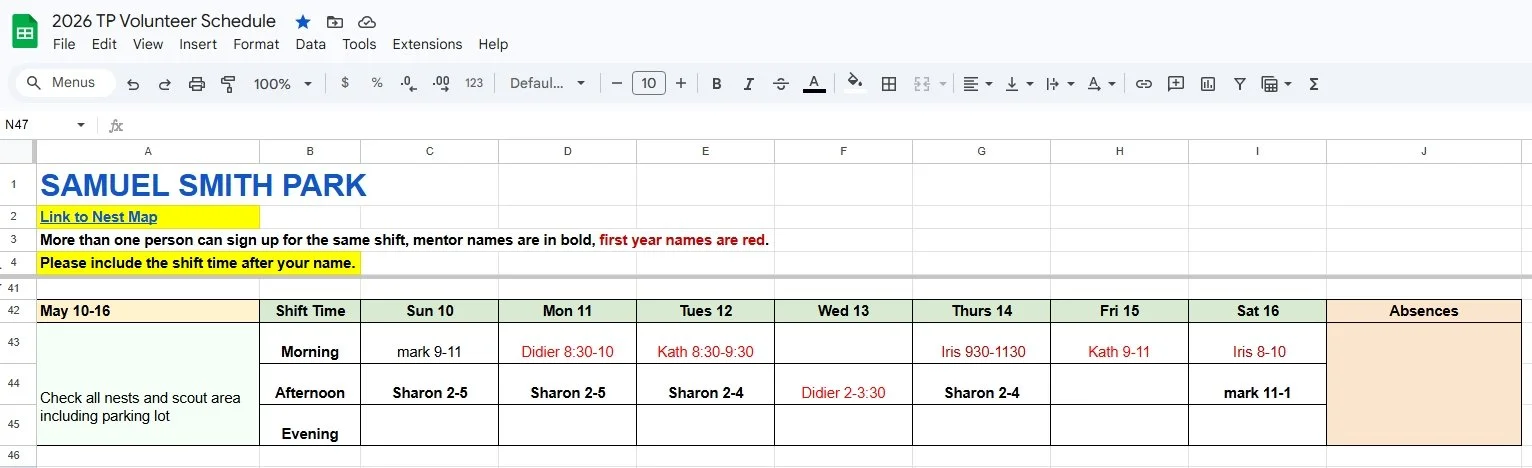
During nesting and hatchling season we ask volunteers to sign up for their shifts two weeks in advance.
We ask volunteers to commit to their shifts unless circumstances prevent them from doing so. If you cannot make the shift you signed up for, please use the park chat to find a replacement. If you cannot find a replacement, please text the Hotline.
What to Bring to Your Shift
Sometimes we encounter nesting turtles or emerging hatchlings, which can take many hours! It is good to be prepared for a wait, depending on when the next volunteer arrives on scene. If you are staying on shift longer than an hour, we recommend you bring the following items with you:
Water bottle and snacks to keep you going
Clean, deep containers
Brown paper bags (to transport injured birds, or hatchlings during hatchling season)
Hammer (for lifting and securing nest protectors)
Work gloves
Hand sanitizer: It is good practice to wash your hands after using hand sanitizer, as the alcohol can harm turtles. Do not touch turtles after using hand sanitizer until you are able to wash with soap and water.
Gloves (optional): Some people prefer to use gloves when handling turtles. Only use disposable nitrile or vinyl gloves. Latex gloves contain chemicals that can harm turtles, especially hatchlings. Multiple pairs of disposable gloves are best, since we must avoid cross contaminating turtles with bacteria from different areas in the park.
Binoculars (they help you observe at a respectful distance) (optional)
Folding stool or a cloth for sitting on (optional)
What to Do During Your Shift
When you arrive at the park, message the Park Check In chat on Signal: “Trevor checking in at south High Park”
Walk around the park, looking for nesting Mamas, hatchlings or basking turtles (depending on the season).
Check nest protectors for emergence holes, hatchlings, damage or missing number tags.
You can share photos of snapping turtles, painted turtles and red-eared sliders in the General Chat, we may use them for social media.
Talk to park-goers about Turtle Protectors and ask them to call the Hotline if they see a turtle on land.
When you are leaving the park, message the Park Check In chat: “Trevor checking out of south High Park”. You may also include the numbers of any protected nests you checked.
Staying Safe on Shifts
Please remember that your safety is most important! If you need to end your shift for any reason, please do so. If you are protecting a nesting Mother or emerging hatchlings and need to end your shift, please call the Hotline immediately so they can locate a volunteer to replace you.
Sundown: We do not ask volunteers to remain in parks after dark. If you are watching a nesting Mama or emerging hatchlings and it is getting dark, please call the Hotline and ask for backup. You will need to provide a location pin so people know where to find the exact location. If you wish to remain in the park after dark, we ask that you call someone to accompany you so that you are not alone.
Storms or High Winds: We ask that volunteers avoid going into the parks during thunder and lightening storms, or during high winds of 45km/h or higher. This is due to the risk of falling branches in the park. If you hear thunder or see lightening while on a shift, immediately seek shelter away from trees. We ask that you wait at least 15 minutes before resuming your shift (if you wish to).
Extreme Heat: Heatwaves are a common occurrence in the city, including in parks. It’s important to check the weather forecast before your shift and bring appropriate sun protection and hydration. Please tend to yourself, stay hydrated, seek shade, and limit your time on shift if needed.
Injuries / Feeling Unwell: If you sustain a mild injury or feel unwell during a shift, notify the park chat and finish your shift early. If you seriously injure yourself and need assistance, please call the Hotline. When you are able, please fill out the Incident Form (linked on Volunteer Central).
Staying on Land: Turtle Protector volunteers never go in water. If you see an injured or dead turtle in the water, please call the Hotline. The Hotline Operator will arrange for park staff to safely retrieve turtle.
Ticks: Blacklegged Ticks that carry Lyme disease have been found in parks across the city. Migratory birds often transport these relatives. We recommend that volunteers perform tick checks if they go off-paths or walk in tall grasses. Learn more about ticks in Toronto.
Zootrophic Diseases: Zootrophic diseases are those that can be passed from animals to humans. We should always be aware that any animal we handle could not only bite, scratch or injure us but they could also carry a disease that could make us very sick.
In all cases involving wild animals, deciding whether you’re comfortable with the risks is a personal choice. As Turtle Protectors we often want to help all kin. Please make your own choices about your own level of risk / confidence / ability and if you are not comfortable in a situation there is no obligation to be involved.
Always contact the Hotline and/or the Toronto Wildlife Centre (TWC) before approaching a wild animal in need. There is good advice on the TWC website under “Wildlife Assistance” that can help you respond.
Salmonella: Salmonella is found in turtle feces. Because turtles in the wild aren't confined to a tank, the risk of Salmonella is smaller. Salmonella risk in wild turtles is very low, but higher in pets. When handling turtles, we recommend that you either wash / sanitize your hands afterwards or wear (non latex) gloves. Be careful not to touch your face after handling turtles.
Bird Flu: There is a high risk of bird flu (avian flu or HPAI) with waterfowl (geese, ducks, swans, cormorants, egrets, heron), raptors and birds in the crow family. There is a real chance that sick birds could be carrying HPAI since there is a current outbreak. Turtle Protector volunteers do not handle waterfowl, raptors or beings in the crow family. Call the Hotline if you encounter any of these beings in need, the operator will coordinate a safe response.
If you come across waterfowl in need of help, you should avoid touching them with bare skin, and if you do you should wash / sanitize well afterwards. Ideally gloves and a face mask, or you can use a box, sheet or bag to contain the animal. After handling, any non disposable clothing that touched the animal should be considered contaminated and washed well / separate from regular laundry.
Rabies: Rabies vectors include coyote, foxes, skunk, raccoon and bats. These animals can also inflict serious physical injuries. While the incidence of rabies in Canada is very low, it is often fatal to humans. So Turtle Protectors volunteers do not handle any of these animals. Instead we call the Toronto Wildlife Centre Rescue Team or 311.
Helping Turtles Cross the Road
Road mortality is the biggest threat facing turtles after habitat loss. So patrolling roads near your local park and responding to turtle sightings near or on roads or parking lots is always our first priority.
This means if you are with a nesting mama or hatchlings and you see a message about a turtle on a nearby road, you would leave the hatchlings or nesting mama and respond to the turtle on the road. Remember, turtles depend on the adults to keep their populations stable and the loss of one adult can take decades to replace.
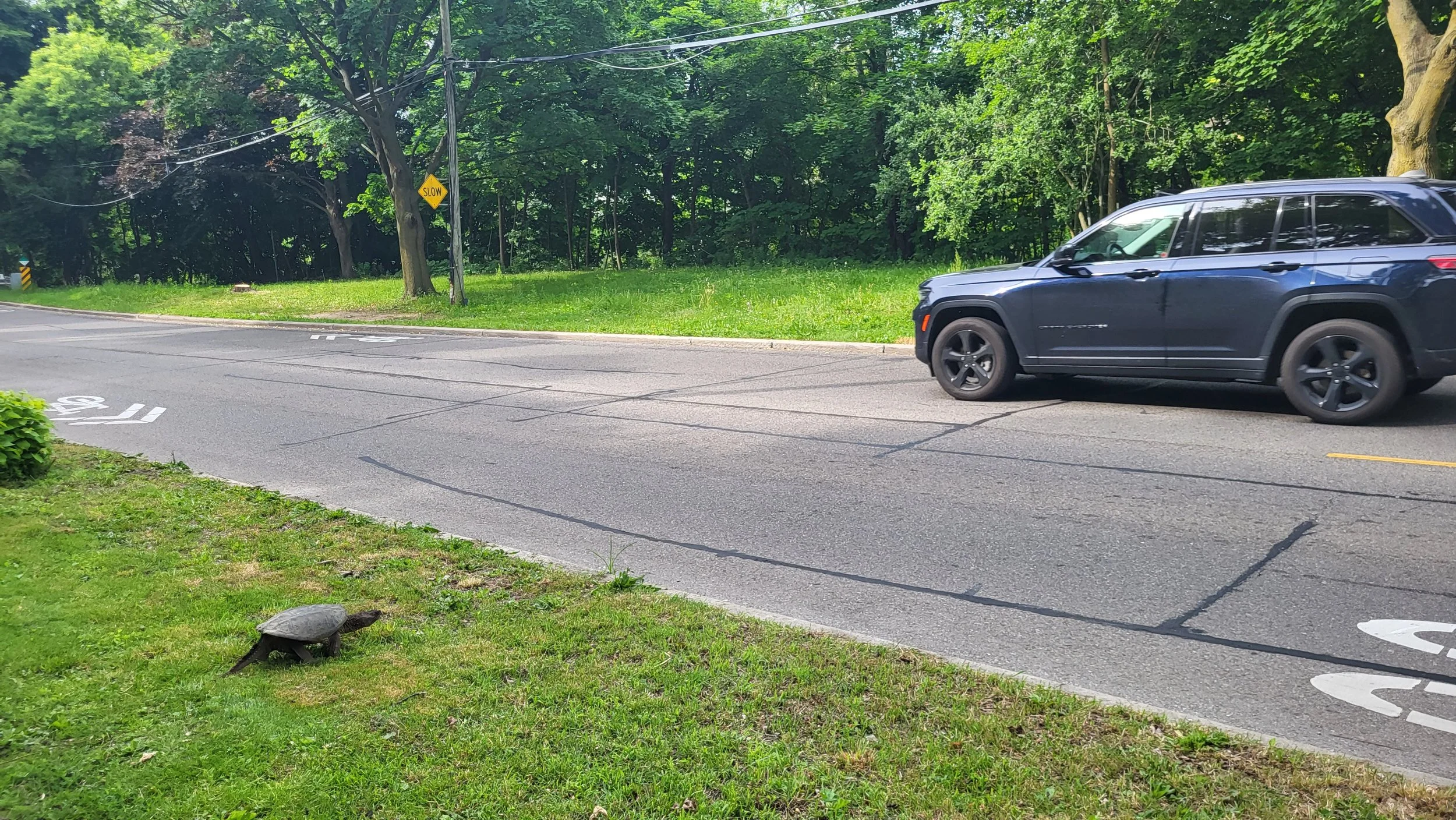
A nesting mama Snapping Turtle approaching Ellis Ave near Rennie Park
If it is safe to do so, please help turtles cross the road in the direction they are heading. Remember that your safety is first priority - please do not to anything to jeopardize your wellbeing.
It is best to assist turtles crossing the road in pairs, so one person can keep an eye on traffic while the other helps turtle.
How to pick up most turtles
1) Place your hands on their shell, between their front and back legs. Hold them with a very firm grip.
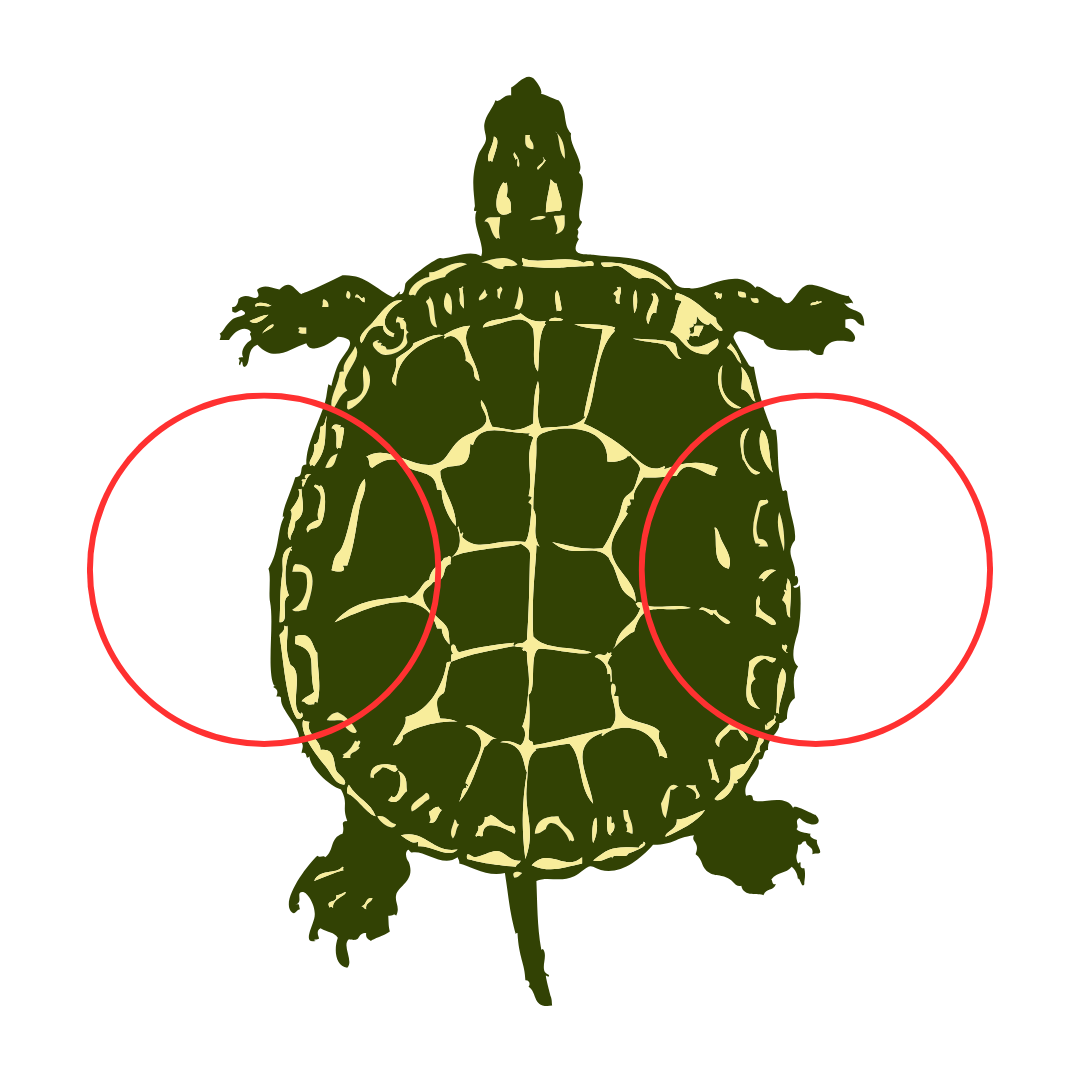
Turtle shells are part of their skeletal system. If you drop a turtle and crack their shell they will need immediate medical care
2) Be ready for turtle responses.
Snapping turtles may snap in response to being touched. If you hold them firmly in the middle, towards their back end, their mouth will not reach your hands.
Turtles have claws for digging, so when you pick up a turtle you will likely feel their claws on your hands or wrists. They won't cut you, just be ready for the sensation so that you don't drop them!
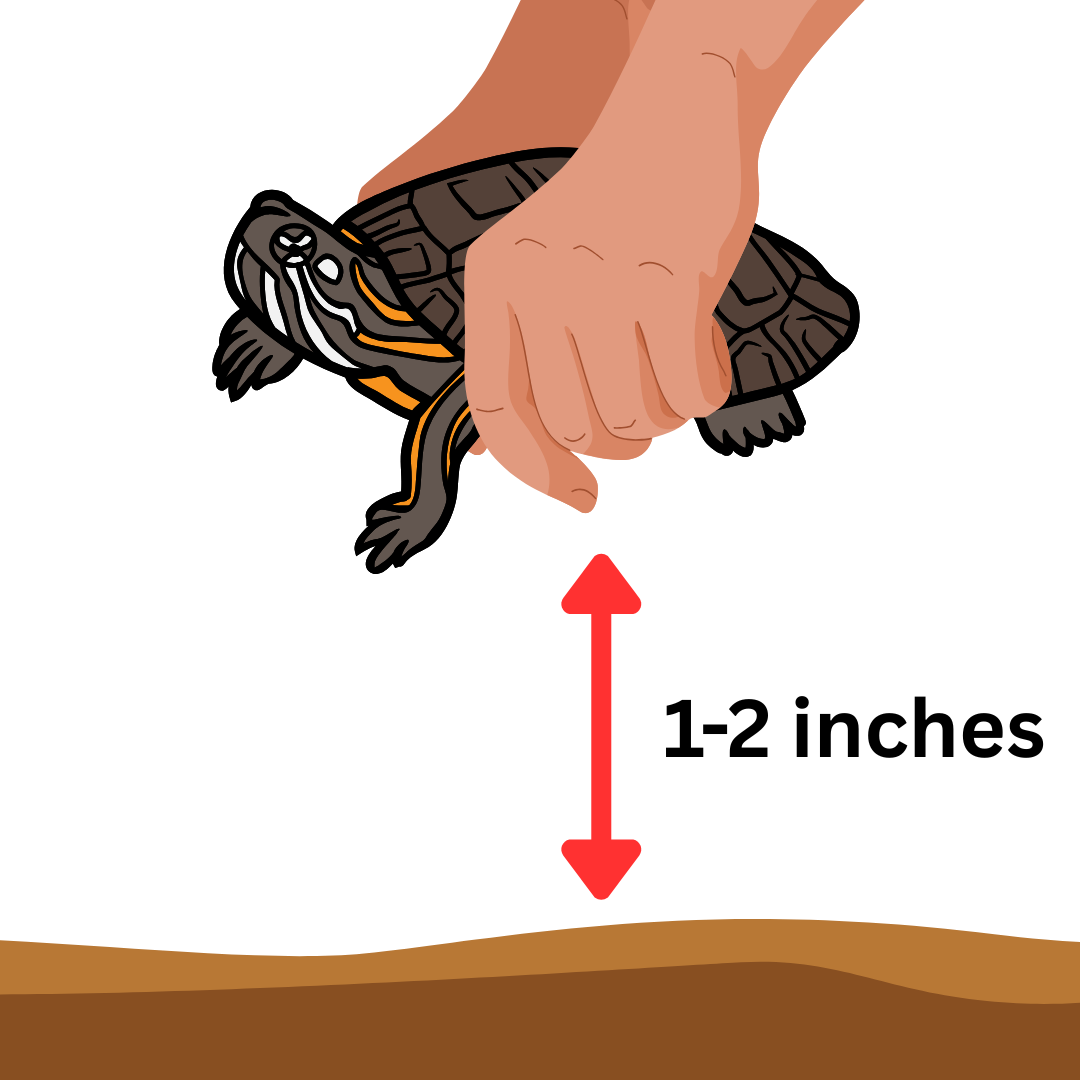
3) Lift and hold turtle very close to the ground (1 to 2 inches off the ground)
This way, if the sensation startles you, they won't fall very far and get injured.
Carry them across the road and place them on the other side. Wash your hands as soon as you can.
Here are videos that show different options for helping turtles cross the road:
How to Help a Painted Turtle Cross the Road: https://www.youtube.com/watch?v=rBJd1y6wCAk
How to Help a Snapping Turtle Cross the Road: https://www.youtube.com/watch?v=nY6wUAv4CSQ
How to Help Turtles Cross Roads: https://www.youtube.com/watch?v=zwaJvvWlUXg
